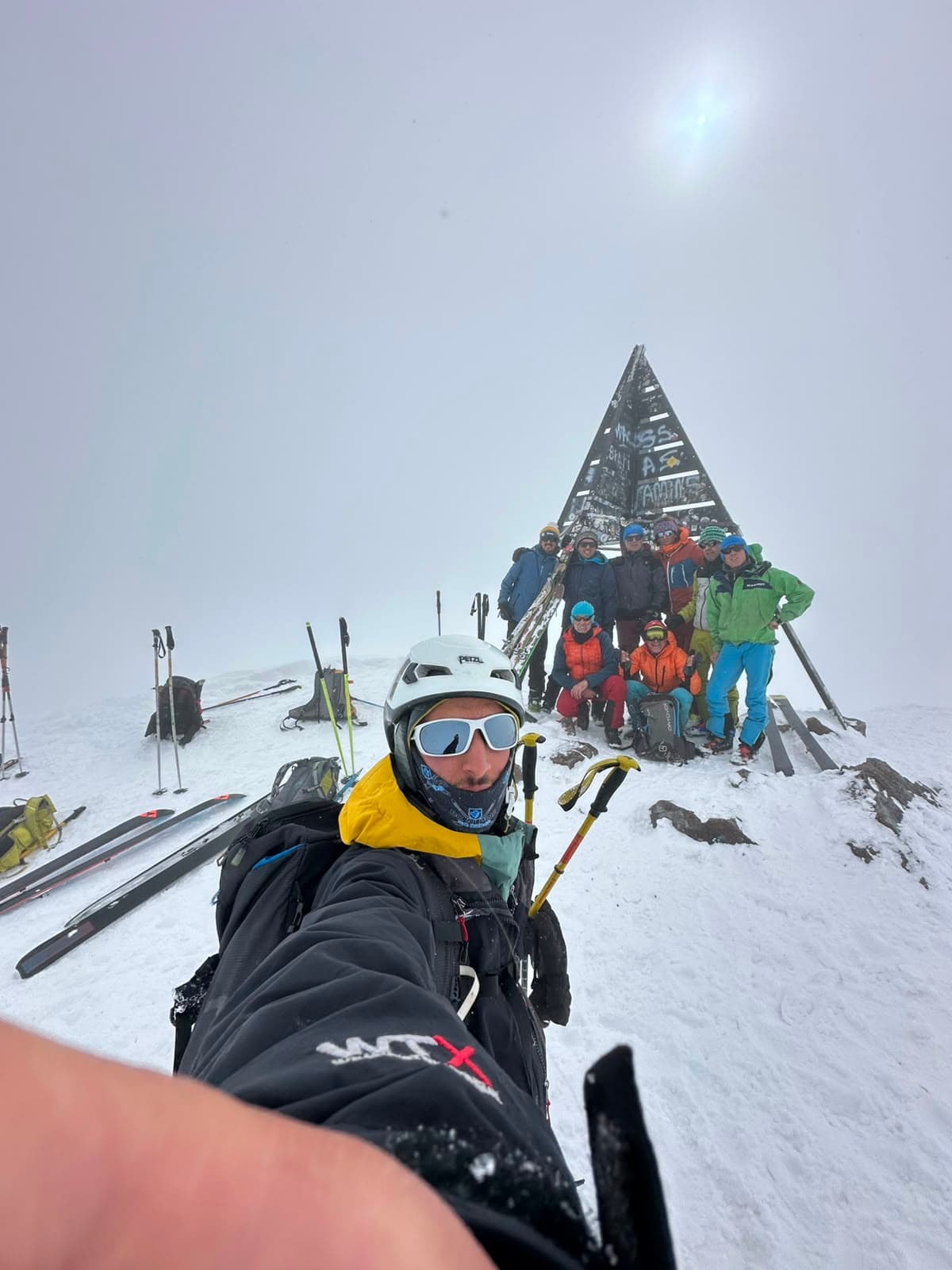
The eastern High Atlas
Mgoun feels different from the moment you enter its valleys.
Farther from the familiar routes around Toubkal, the landscape opens into a quieter and more expansive part of the High Atlas. Villages give way to long valleys, broad mountain faces and a horizon that seems to keep moving away.
In winter, snow changes the character of this landscape again. Dry ridges become white lines against the sky. High valleys hold the cold and the mountains take on a stripped-back, almost northern appearance.
For ski touring, this combination of scale, remoteness and varied terrain is what makes Mgoun so compelling.
Into the massif
The long way
into Mgoun.
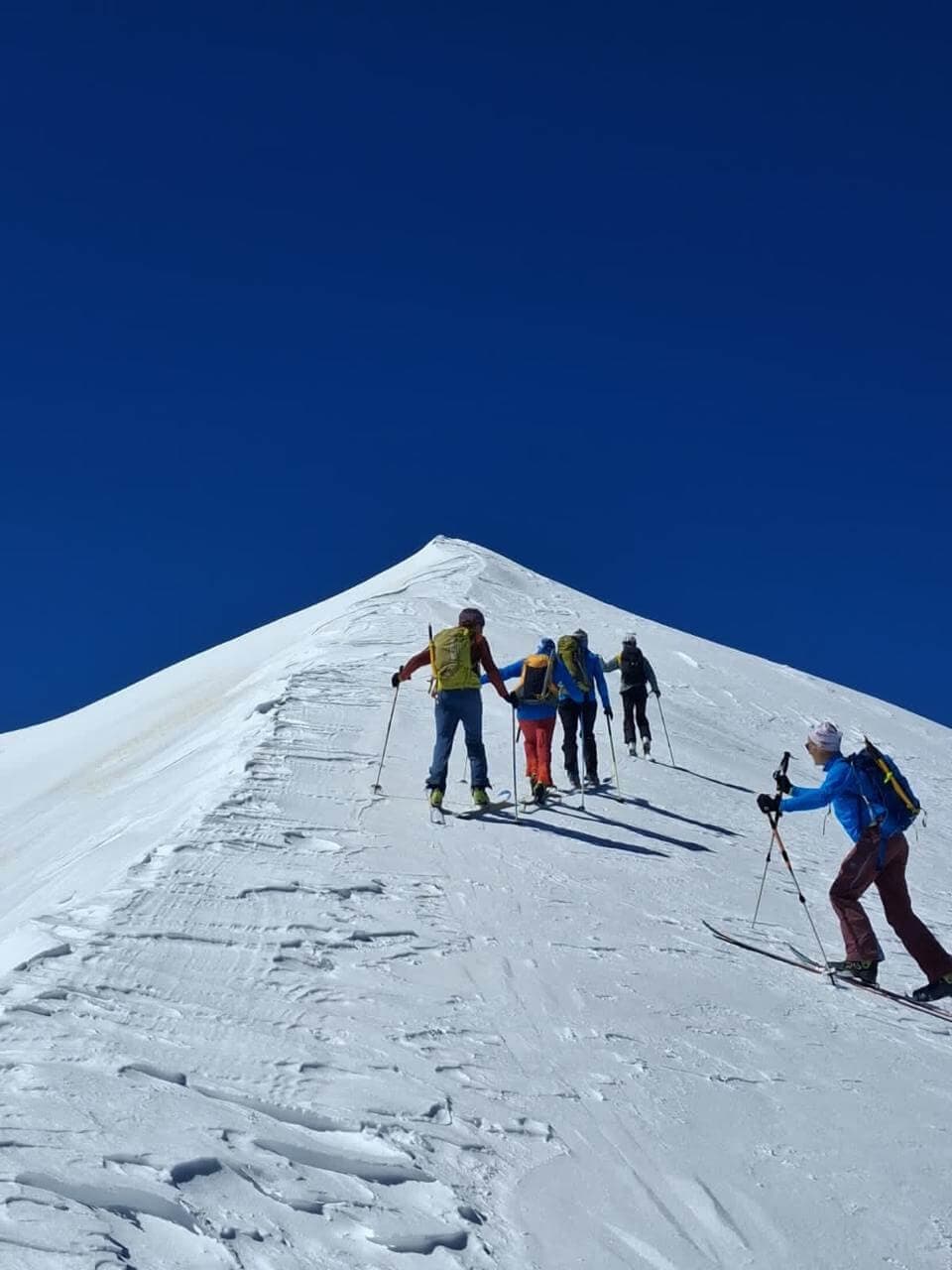
The approach is part of the experience. There is no instant transition from road to high mountain. The landscape unfolds gradually, giving the journey time to settle into its rhythm.
Lower valleys retain traces of daily life. Fields, villages and old paths sit beneath the larger mountain landscape, while the upper slopes remain distant.
As the altitude increases, the proportions change. The valley becomes smaller behind you and the surrounding ridges begin to dominate the view.
Winter makes this transition even more pronounced. Snow gradually connects the landscape into one continuous mountain environment.
Winter terrain
A mountain
without edges.
Mgoun does not feel like a single mountain line. It is a landscape of ridges, bowls, valleys and broad slopes that change character as the winter develops.
Snow can transform familiar rock formations into smooth, connected terrain. Lines appear where there were none before, while wind and exposure constantly reshape the surface.
Ski touring here becomes an exercise in observation. The best route is rarely simply the most obvious one. It is the line that fits the conditions, the terrain and the day.
That sense of discovery is part of what makes the eastern Atlas so rewarding.
Explore ski touring in the High Atlas→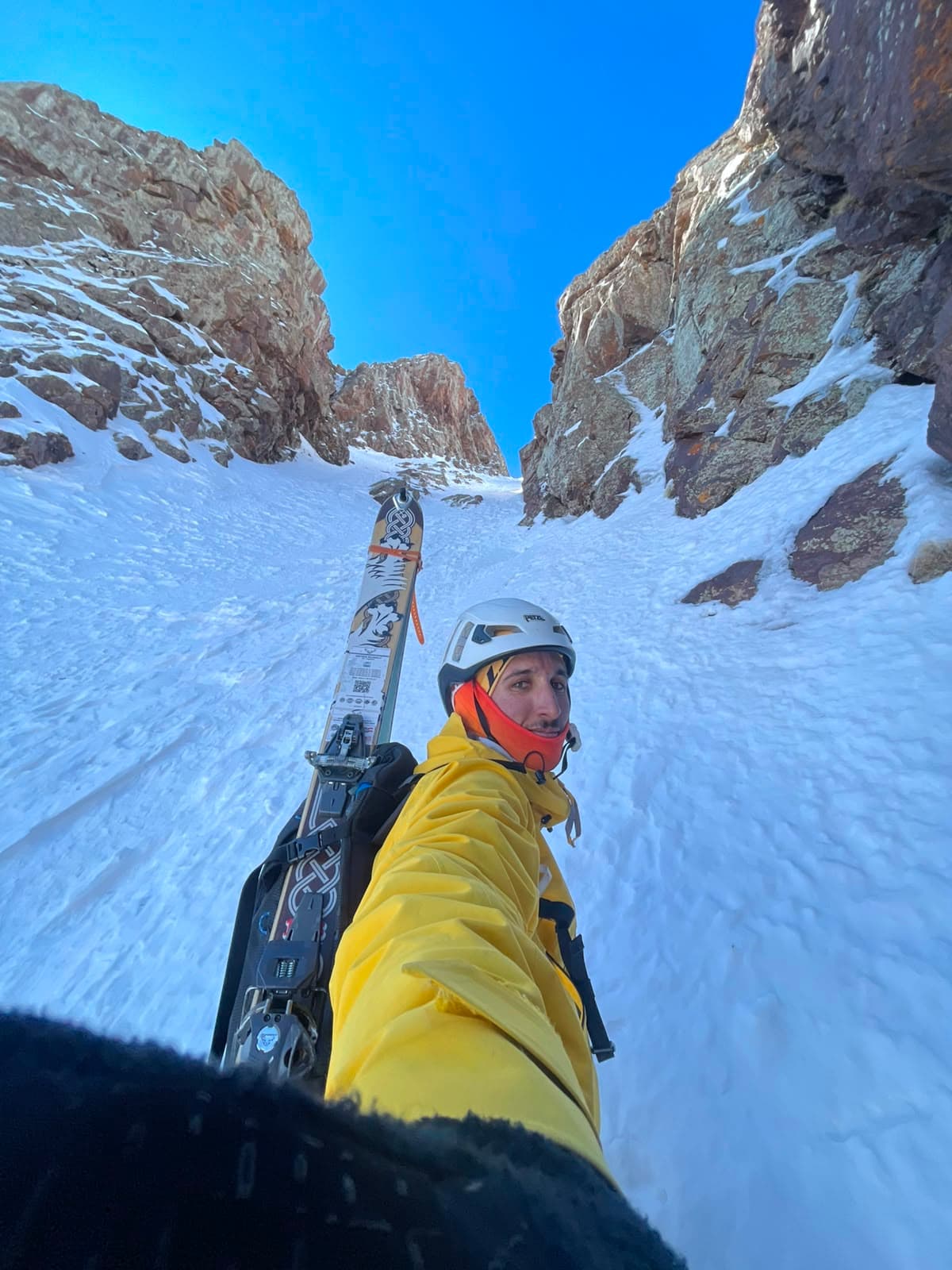
Winter · Mgoun
Into the high country.
Higher terrain
Where the Atlas
opens wide.
Higher in the massif, the feeling of space becomes difficult to ignore. Ridges stretch across the horizon and the valley floor disappears far below.
The terrain becomes increasingly dependent on conditions. Wind, temperature, aspect and recent snowfall all influence how the mountain can be travelled.
This is where the slower rhythm of ski touring becomes valuable. The climb is not just a way to reach the top. It gives time to understand the mountain before committing to a descent.
There is something deeply satisfying about that process: moving quietly, watching the snow and gradually building a picture of the terrain.
The descent
The mountain
gives it back.
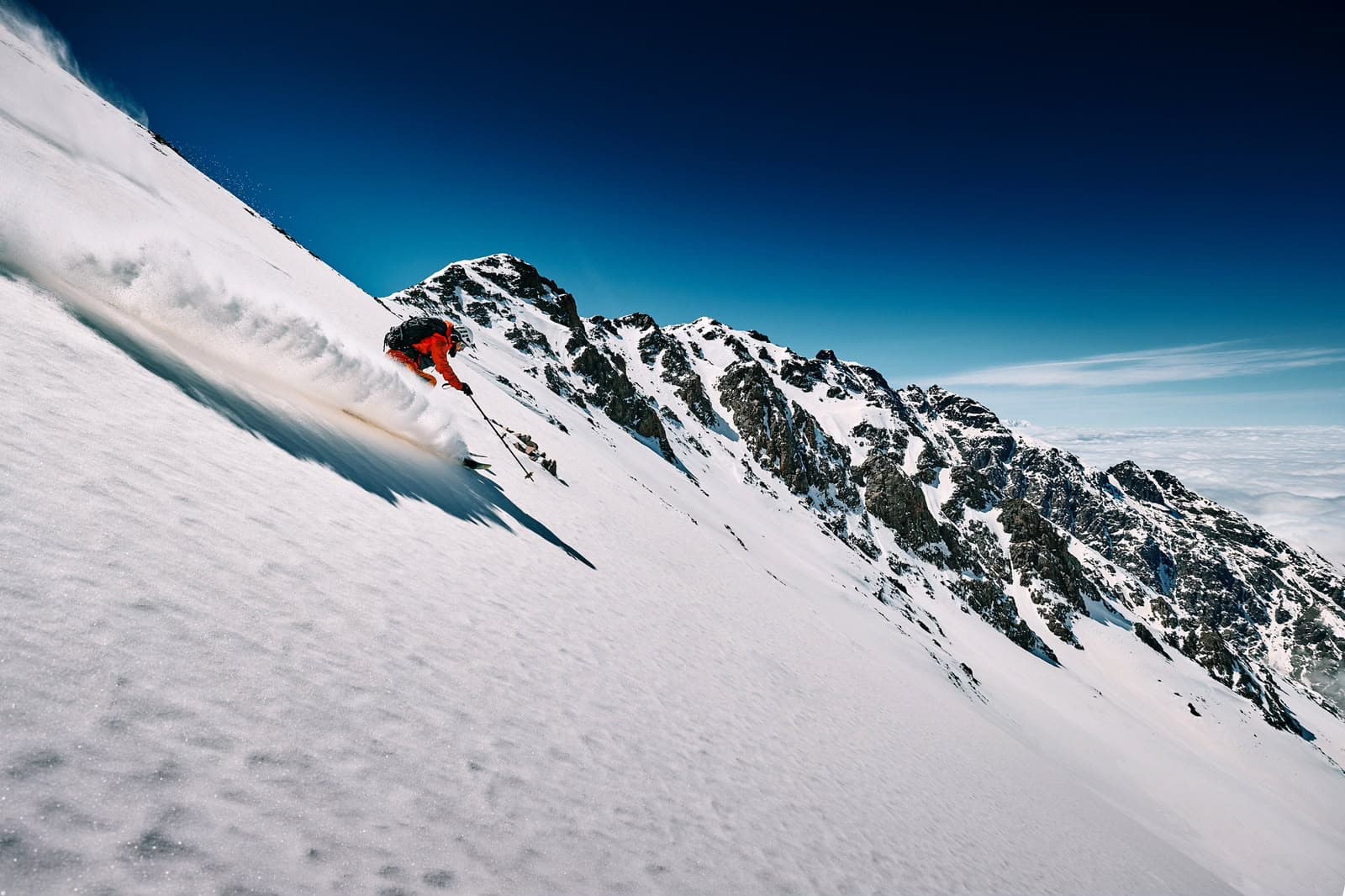
After hours of climbing, the perspective changes.
The terrain that took time to cross becomes a line downhill. Broad slopes, gullies and changing snow create a completely different relationship with the mountain.
Good ski terrain is never simply about steepness. It is about the quality of the snow, the shape of the slope and the way everything connects.
In Mgoun, that connection can feel particularly rewarding. The descent becomes a continuation of the journey rather than an ending.
A quieter Atlas
The attraction of Mgoun is not only the skiing.
It is the feeling of being further away. The mountains seem larger because there is less around them. The journey takes longer to unfold and the landscape has more room to breathe.
Days in the mountains settle into a simple rhythm: climb, observe, adapt, descend. Between those moments there is time to notice the details that are easily missed when the objective becomes the only focus.
That is perhaps the strongest memory Mgoun leaves behind. Not a single viewpoint or one perfect turn, but the feeling of travelling through a vast winter landscape.
A different side of winter
Further from the
familiar routes.
Toubkal may be the most recognisable summit in Morocco, but the High Atlas does not end there.
Mgoun reveals another side of winter in the range: longer approaches, open terrain, quieter valleys and a stronger sense of distance.
For anyone drawn to ski touring because of the journey as much as the descent, that is exactly what makes the Mgoun massif worth discovering.
Continue the journey
Explore the
winter Atlas.
Mgoun is one part of a much wider winter landscape. From Tacheddirt and Toubkal to Tazaghart and the high passes of the Atlas, each journey has its own character.
Explore Ski Touring→01
8 Days
Tacheddirt
& Toubkal
A multi-day ski journey through the Tacheddirt and Toubkal areas, linking high mountain terrain and winter objectives.
02
6 Days
Tacheddirt
Ski Touring
A focused ski-touring journey into the Tacheddirt and Imenane Valley, with high passes and changing winter terrain.
03
6 Days
Tazaghart &
Toubkal High Route
A high-route expedition connecting Tazaghart and Toubkal through demanding winter terrain, passes and mountain lines.
From the Journal